
(Shoulder Help for Home – Part One)
The shoulder is a complicated joint! The humerus (shoulder bone) is intricately involved in the position of the scapula (shoulder blade) and clavicle (collar bone). In addition, all these bones can be influenced by the position of the rib cage. For anyone at home struggling with a new onset of shoulder pain and unable or hesitant to seek care in this health care climate, here are some things to try.
1. ICE: REDUCING PAIN
Apply ice packs to both the front/ top and BACK of the shoulder joint (see Positioning below). Apply for 15 minutes either sitting, or as is often easiest, lying down.
Be sure you have a thin cloth cover between the ice and your skin. Ice a minimum of two times each day for 15- 20 minutes. You should allow at least 2 hours between ice treatments.
While ice is being applied, it is normal for the pain to increase some before it backs off. This is fine. If it is unbearable (possible, but less common) take the ice pack off for a few minutes and then resume icing. Ice helps with reducing pain and with the speed of recovery.
2. POSITIONING
Lie on your back with a folded bath towel under your elbow to level out the arm bone in the socket (glenohumeral joint). Use a pillow under your head. This is generally a good position for ice treatments. You can also start your sleep position this way, but many people will want to roll to their side at some point.
[envira-gallery id=”4258″]
Side-sleeping: Sleep on the non-affected side with a pillow under your arm pit to open area for maximum circulation and for support. Be sure your neck is comfortable. A towel roll under the neck as shown can be helpful. If the shoulder pain is high, you may also need another rolled bath towel or pillow to put in front of your body to support your forearm. This is to level out the arm and reduce strain transferred up to the shoulder joint.
Chair: Occasionally a patient can find relief only by sleeping supported upright in a recliner chair. The same principles of added towels apply to help keep the shoulder comfortable. Consider propping up the arm a bit with a pillow or towel under the elbow to help in this position.
3. PROTECT
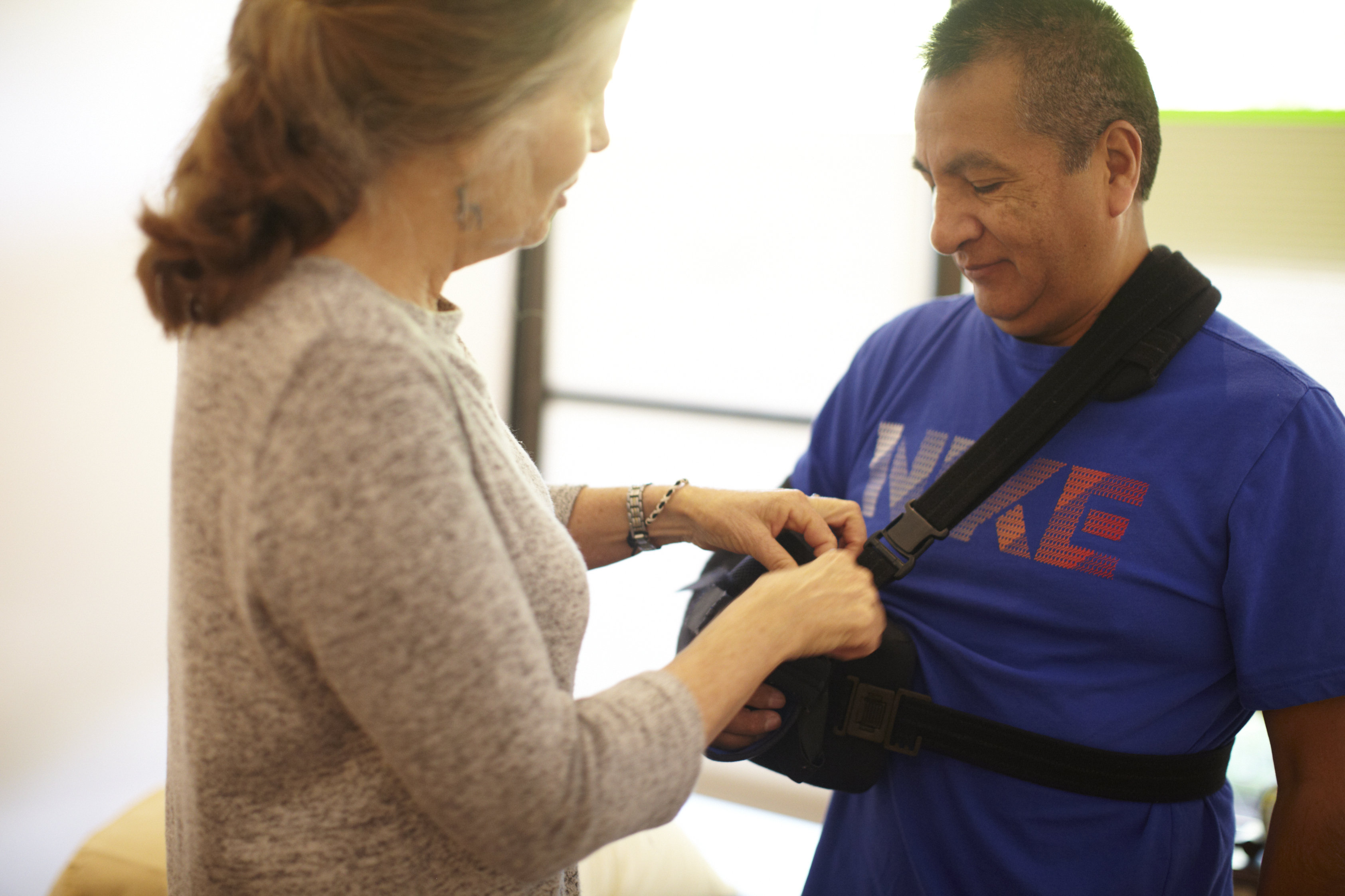
A sling, if you have one, can help rest the shoulder temporarily. You can either get one online or make one from a scarf or large bandana. Do not use a sling if you do not need one. This position used for too many hours in the day can lead to stiffening of the shoulder joint. A sling as a temporary measure for a few days is generally fine. You can also use it to give your shoulder a simple rest for an hour or two in the day between ice treatments.
4. AVOID: NEVER FORCE THE SHOULDER.
This is not the time to try to force your arm to move, force it to raise up over your head, or try your brother’s exercise … Some people may want to try to force their arm by raising it up repeatedly in order to fight back against losing function. This is generally a bad idea and can strain your shoulder further. Raising the arm over your head while standing is frequently the last exercise I would give a patient in rehab, due to the potential strain involved.
