

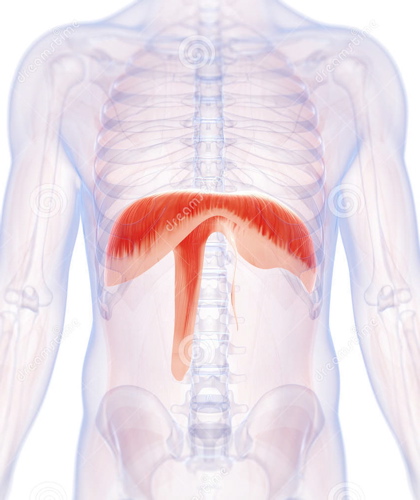
 The word “core” is used quite often in gyms and by fitness professionals but it is rarely described further than that. When we talk about the “core” of the body, we are referring to a pressurized cylinder in the center of the body. This cylinder is where efficient posture and breathing should be derived from. The top of the cylinder is the respiratory diaphragm as depicted. This is the main muscle, along with the ribcage muscles, we are meant to use for inhalation. The pelvic floor (pelvic diaphragm) is on the bottom of the cylinder. The abdominals and connective tissues of the low back region make up the sides of this cylinder – anchoring both the respiratory diaphragm above, and pelvic floor (pelvic diaphragm) below. Like any mechanical cylinder, pressure in this “core” cylinder is meant to create an effective pump. Too much strength in one place like a tight neck or back, or not enough strength elsewhere like a weak pelvic floor or abdominal wall create imbalance in the cylinder much like a dented can might look. The primary work of the core is to pump air efficiently, in and out of the body. It’s the most important thing any of us does each day. Since breathing is essential to our survival we will do it somehow, some way. If we don’t do it with an efficient “core” cylinder, we with have to compensate and work harder than we are meant to for breathing. Compensation (with an inefficient cylinder) in our patients often comes in the form of neck pain, back pain, hip pain and the list goes on. One of the benefits of improving posture and “core” strength through the Postural Restoration approach, is that it requires us to establish efficient breathing, balanced postures and fluid movement patterns (http://www.posturalrestoration.com).
