Physical Therapist Needed

We have an opportunity for another Physical Therapist to join the practice. A minimum of 5 years of experience is needed, with skills in manual therapy and interest in and/or skills in bio-mechanical functional activity, or Postural Restoration. We are looking for someone who is comfortable with autonomy, creative and energetic, and interested in participating in collaborative investigation into the most advanced treatment techniques.

Please call 919 932 7266 or email: myadvancephysicaltherapy@gmail.com

Knee Pain

How do we approach knee pain, based on a Postural Restoration understanding of the knee?
We are talking here about a gradual development of knee pain that now demands your attention, not an identifiable sport injury or accident. Your knee hurts when you walk, squat, climb stairs, run, whatever.

In addition to examining the knee for joint or muscle injury, we are very interested in finding out why there are abnormal stresses causing pain at the knee, which may have led to injury. Abnormal stress is often the result of poor alignment of the knee joint bones and muscles, and of an inefficient, poorly balanced movement pattern. We assess the low back, the pelvis, hips and feet, for position and for appropriate muscle activity.

When the cause of pain is injury, inflammation, pain and weakness must be addressed and corrected. However, even in cases of injury, it is important to include correction of postural alignment in the treatment plan in order to minimize stress to the joint, to promote more rapid healing, and to ensure healthy movement patterns for the future.

advance Physical Therapy

Michael is a science teacher and has a very inquisitive mind. The other day he wondered why there is a ‘d’ missing in our name. We should be ‘Advanced Physical Therapy’. He has been coming for a while and readily admits that we really are  advanced in comparison to other places, on a higher level of understanding and treatment. So why not call us ‘advanced’ ?

Well, yes. But…  We intend to advance physical therapy. However, as in any practice the more you advance the more you see what still needs advancing. Even though our physical therapy is advanced, it is not finished,  it needs a lot more advancing. And that is what we intend to do:                              Advance Physical Therapy

Running Shoe recommendations 2010

Every year the Postural Restoration Institute compiles a list of good running shoes. Here is the latest:

Copyright 2010 © Postural Restoration Institute™
RUNNING SHOES
PRI Recommendations: (in alphabetical order)
1. ASICS 2150 (S-M)
2. ASICS Cumulus (S-M)
3. ASICS Evolution (S-M-L)
4. ASICS Foundation (M-L)
5. BROOKS Defyance (S-M)
6. BROOKS Dyad (M)
7. BROOKS Glycerine (S-M)
8. NEW BALANCE 850 (M-L)
9. SAUCONY Echelon (M-L)
10. SAUCONY Stabil (L)
Underline = neutral shoe considerations for orthotics
Italics = light lateral calcaneal give
Qualities of a good shoe:
1. Solid heel counter
2. Excellent calcaneal support (no lateral heel give)
3. Patient can feel arches of shoe
Sign of a good shoe:
PRI tests are negative (pick a few):
Adduction drop, SLR and HGIR (frontal, sagittal, &
transverse planes)

If you are a runner and have questions, ask Jean, one of our Physical Therapists who  is  trained in Postural Restoration.

Top Ten Recommendations for Runners

These Recommendations are reproduced from the website of the Postural Restoration Institute to celebrate springtime

Lori Thomsen, PT, PRC

Hruska Clinic – Restorative Physical Therapy Services

1. Keep your hamstrings strong, especially on the left. (4 & 5)

2. Avoid overstretching your hamstrings (90o straight leg raise at the hip with the

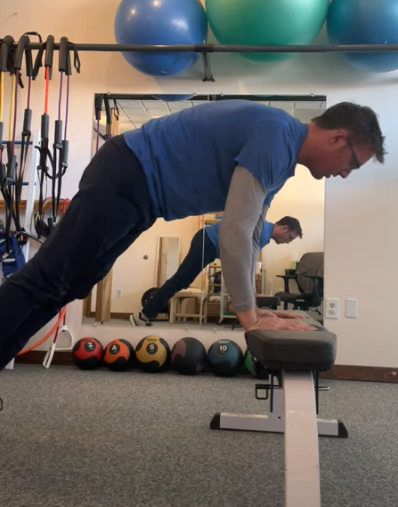
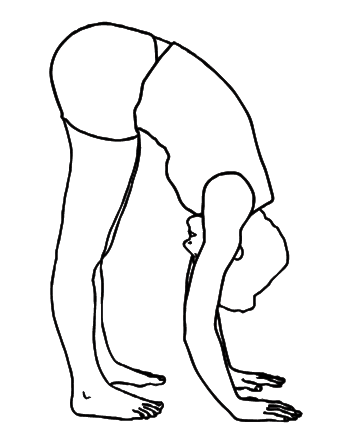
knee straight). Have the ability to stand and bend over and slightly touch toes

(palms to the floor is too much).

3. Occasionally walk slowly up the stairs backwards to keep your glutes

symmetrical. (1 & 4)

4. Properly stretch your Achilles tendon, your toes, and your low back.

a. Heel to floor in the squat position (8)

b. Ankle stretch with shoes on and knees bent (7)

c. Pull great toe up

5. Concentrate on striding out with your right leg and left arm when running. (6)

6. Try to find and feel your right arch when running to assist with shifting to the

left. (4)

7. Perform Standing Resisted Wall Reach to stretch your back, latissimus, and

pectoral musculature. (3 &

8. Stand and shift your body weight over your left leg regularly, keeping weight

shifted through you heel. (4)

9. Keep your left lower abdominals “alive” by performing sidelying activity. (2)

10. Wear correct footwear. Wear shoes that support your heels and that have good

arch supports. Avoid wearing flip flops, sandals and wearing shoes that are

untied during the running season.

Copyright © 2007 Postural Restoration Institute™

New Introductory Postural Restoration Class Starting on April 26th

New Introductory Postural Restoration Class starts on Monday, April 26th at 6 pm to 7 pm. This is an 8 week series, beginning and ending with an objective assessment. It is taught by Susan Henning, PT, PRC.  Space is limited to at the most 8 people. It costs $120. Please call 932 7266 to register.

Stroke Recovery Treatment

My stroke/brain injury was many years ago, can therapy still help me?

The 1990’s were “The Decade of the Brain”.  In the 90’s, there was more funding for brain research than at any other time in history.  What we learned, is that there is a use it or lose it phenomenon in the brain.  We also learned that the brain is capable of changing and adapting depending on the stresses or influences placed upon it.  What this means for you, is that regardless of when your stroke or brain injury occurred, it is still possible to make changes.  But once you start to make those changes, you will have to practice, practice, practice so that you can integrate what you are learning so it can become a part of you.

If your injury was a long time ago, you will have challenges to overcome.  If muscles and other soft tissue are tight and contracted or bones have changed shape, it may impact your ultimate outcomes.  From a movement perspective, while we may be able to make a change in the way that you move during your therapy session, carry over to your life outside of therapy will depend on how and how much you practice on your own.  This is true even if your injury was a short time ago.  But if you have been compensating with your less affected side, you will have to work hard to change habits and ways of moving that have been a part of you since your injury.  It will take discipline and dedication, but it can be done.

Katie Stephens,  PT, NCS

Scoliosis

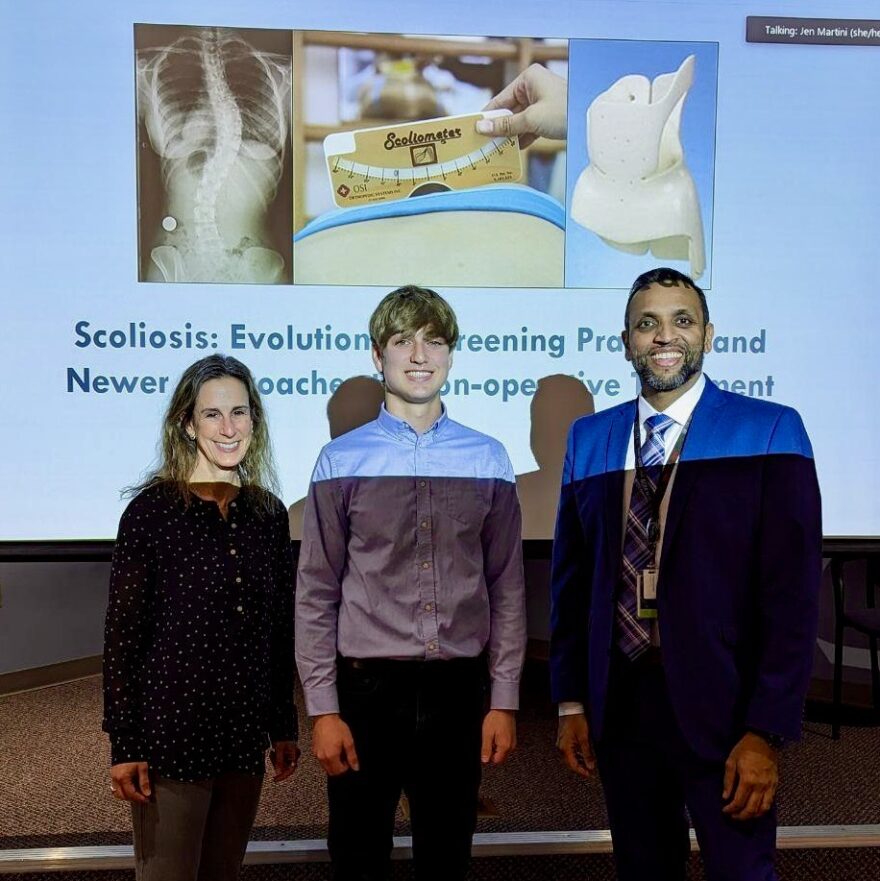
Scoliosis is a case in point. It is so complicated, involving the pelvis, back, ribcage, breathing, etc, that it can serve as a  test for a good bio-mechanical understanding of the body.

I only know of two approaches that try to get to the causes of scoliosis, the Schroth Method and Postural Restoration. All other attempts deal  with the symptoms of scoliosis and they don’t need a thorough understanding of it.

Katharina Schroth suffered from scoliosis herself and she developed an exercise program based on her intuitive understanding of what helped. The Schroth Clinic in Germany, since the middle of the last century, has been very successful, even with older people with significant curves.

Postural Restoration provides a bio-mechanical understanding of the causes of scoliosis and the very precise exercises  are based on that understanding. The exercises help diminish the curvature, particularly among young adults or teenagers. The main difficulty is to get teenagers to do these exercises religiously on a daily basis.

The younger the people and the less pronounced the curve, the easier it is to re-balance the body and get rid of the curve. However, young teenagers are the hardest to motivate.

One of  our therapists, Susan Henning, is hoping for or dreaming of a regular screening  at schools for scoliosis, because the imbalances and the suffering that follows for a whole lifetime, could be avoided.

Lymphedema: what it is and what if it stays untreated

Lymphedema, which is also spelled lymphoedema, is abnormal swelling of the tissues, due to the presence of excess protein-rich fluid known as lymph. This swelling occurs when the lymphatic system malfunctions or is damaged and lymphatic fluid cannot drain as quickly as it is produced. It affects an estimated 100 million men, women, and children around the world, including at least 3 million Americans. Lymphedema of the arm occurs often as a result of treatment for breast cancer. Breast cancer is only one of the many causes of lymphedema. It most commonly occurs in the extremities (arms or legs); however, it can also affect the trunk, breast, abdomen, neck, head, and or genitals.

The fluid that causes the swelling of lymphedema is protein-rich and this makes the tissues easily susceptible to infections. Each infection damages lymphatic structures and places the area more at risk for developing lymphedema. Once the lymphatic systems malfunctions or lymphatic structures are damaged and lymphedema has developed it can be treated but not cured. Early treatments can usually effectively control the swelling. Without treatment, the lymphedema symptoms become progressively more serious. Left untreated, lymphedema is much more serious than the inconvenience of a swollen limb. It is a progressive condition in which frequent infections cause serious pain and may require hospitalization. Skin changes, like benign papillomas may develop. Eventually, lymphedema can lead to the loss of mobility and total disability. In rare occasions malignant skin cancer develops, like lymph-angiosarcoma (Stewart-Treves-Syndrome.)

Alma Vinjé-Harrewijn PT CLT-LANA

We are on Facebook!

Become a fan of Advance Physical Therapy on Facebook!